Sodo
Materials
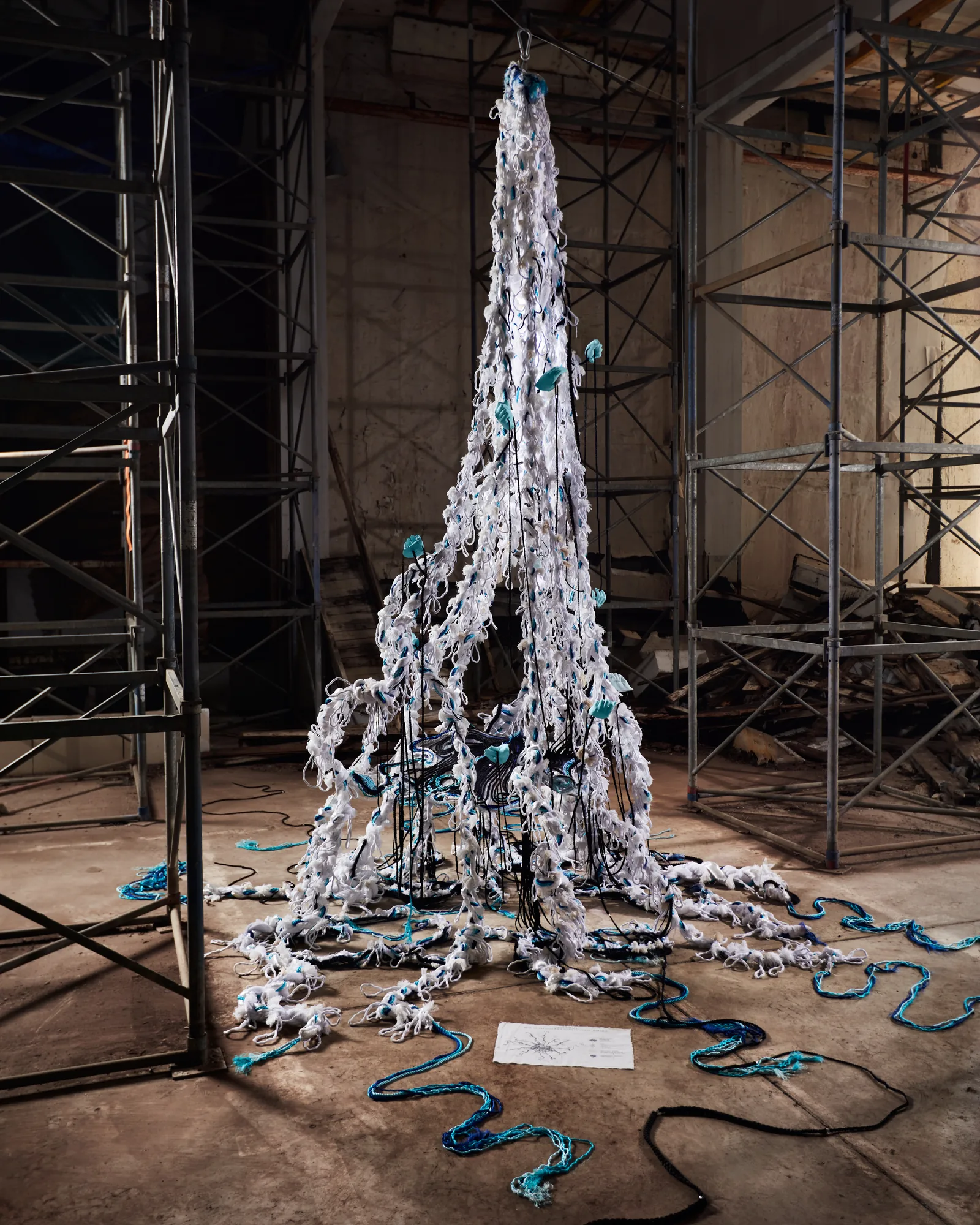
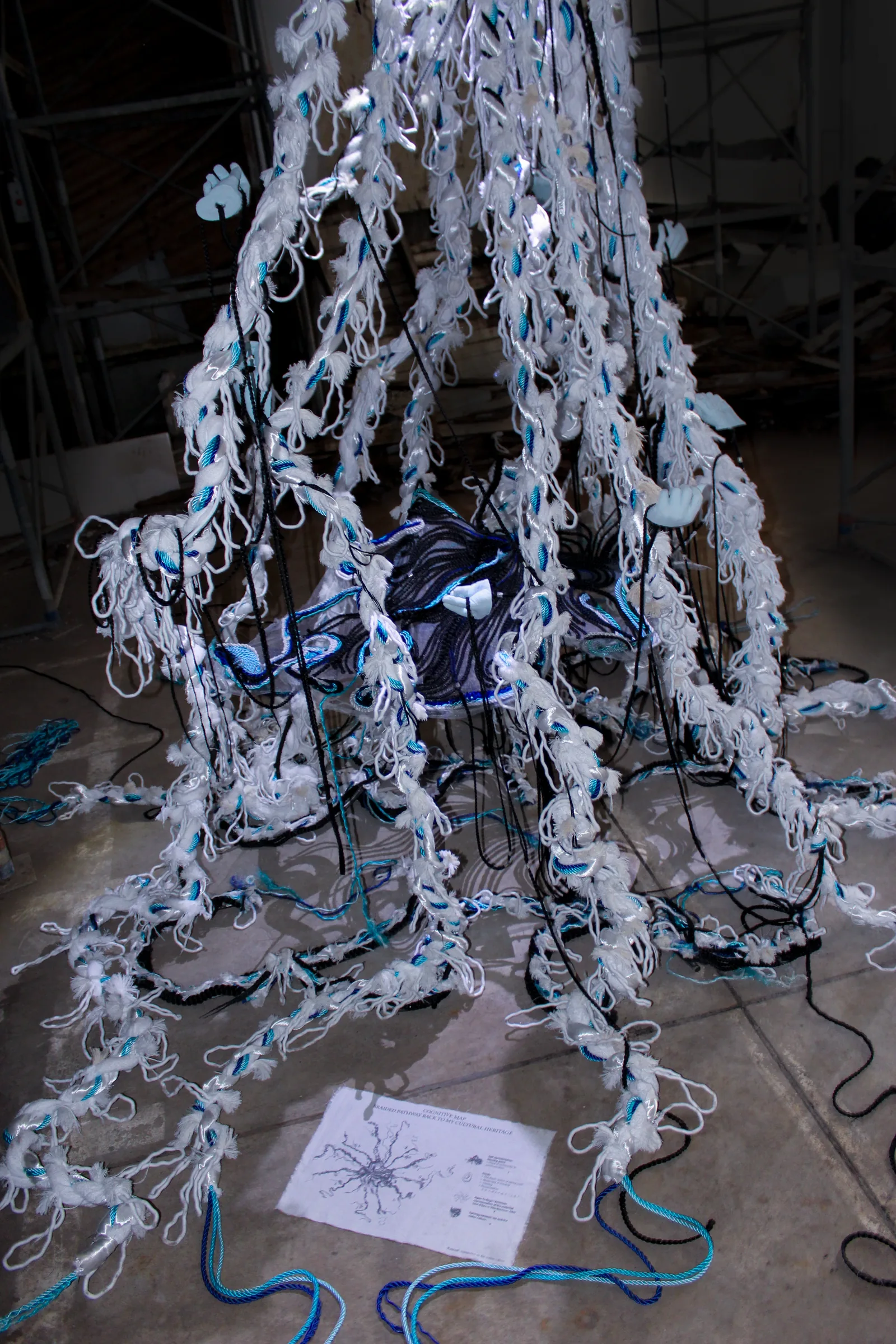
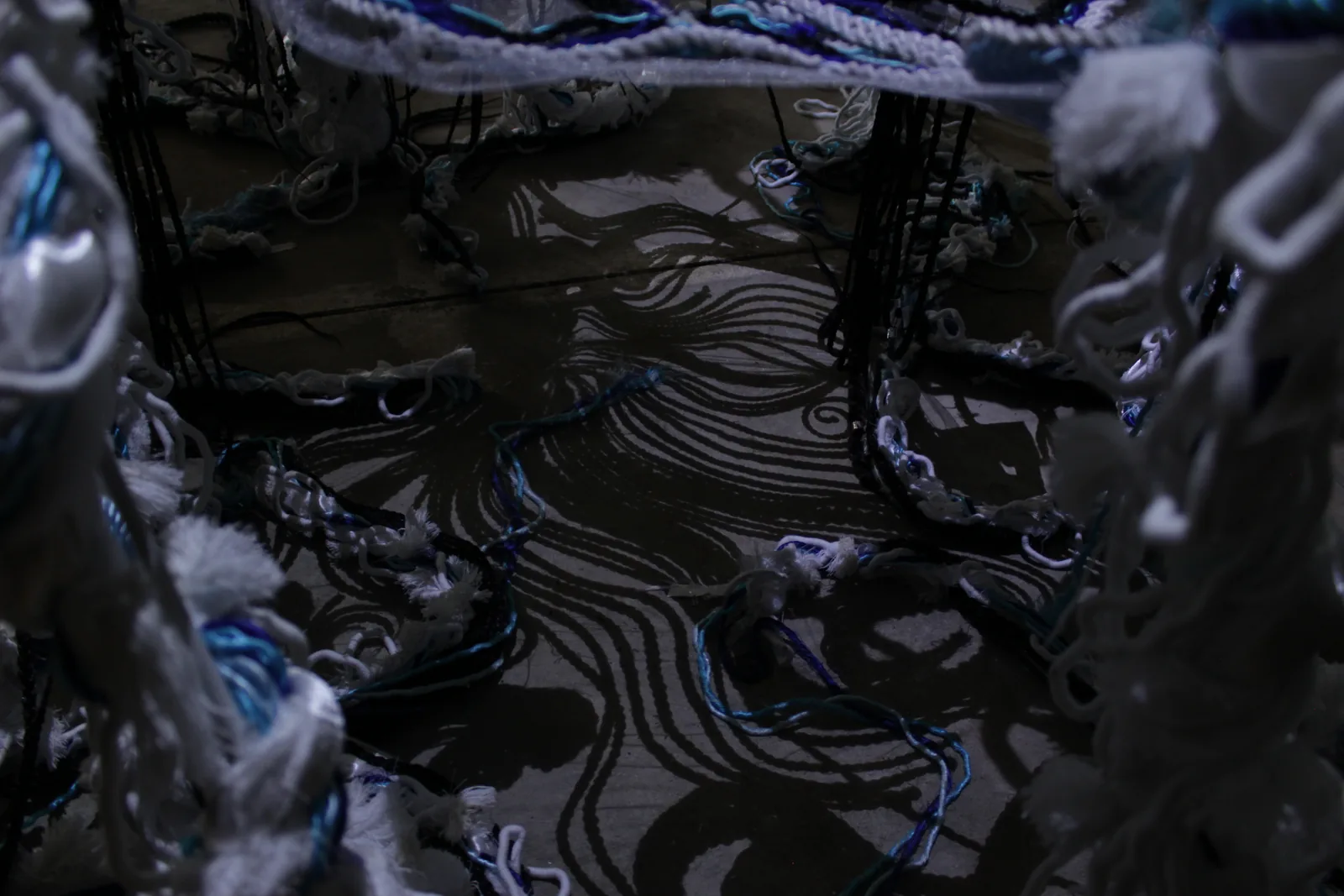
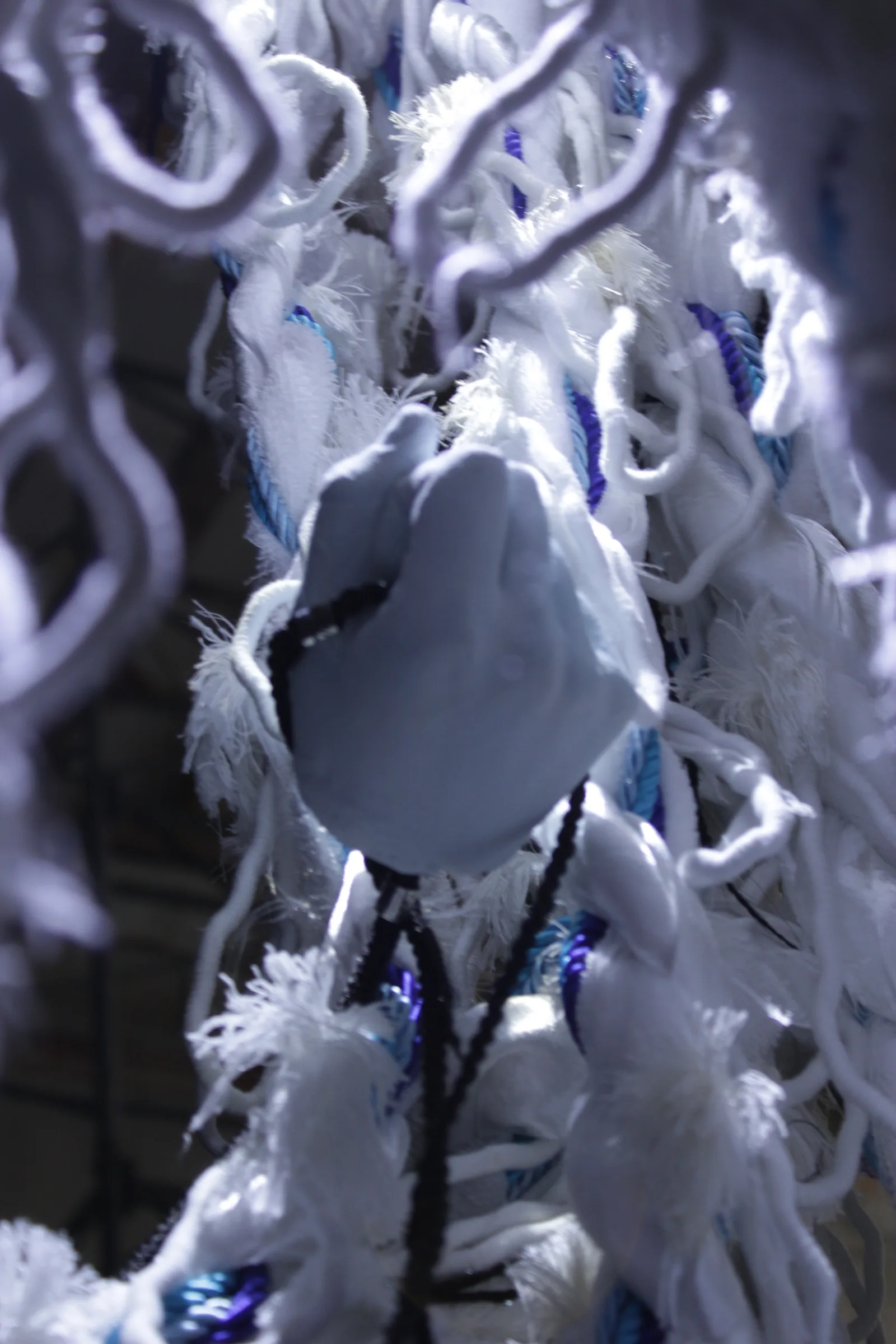
Mixed media. Video, Sound, Towel, Silk, Cotton, Hair, Tulle, Metal, Plaster
Year
2023
Exhibition
Graduation Show, Design Academy Eindhoven, NL
About this work
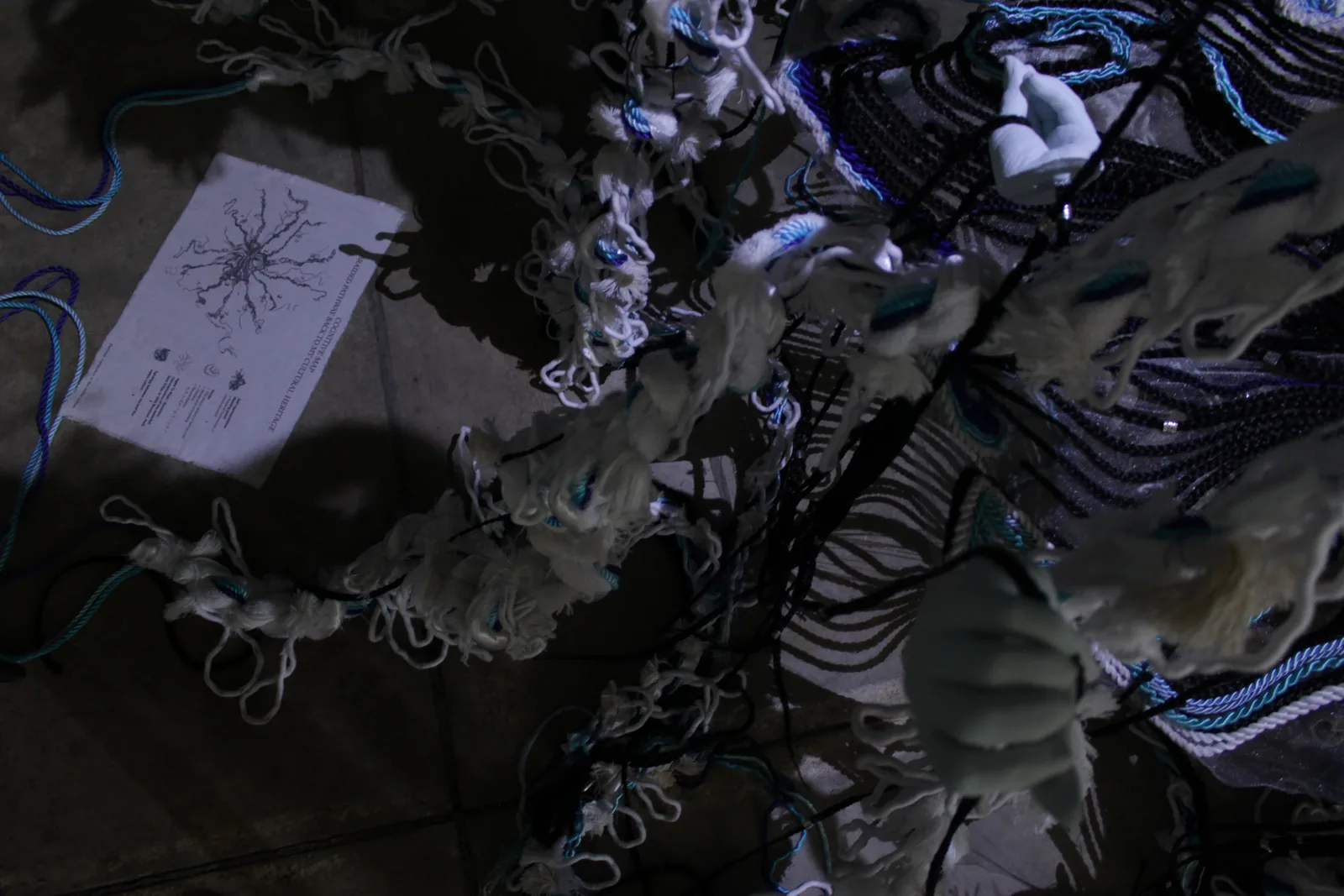
This multimedia installation uses braiding to connect with Haitian heritage piecing together ceremonial cultural textiles. It reimagines the Tèt L'o ceremony at the Sodo waterfall close to Mirebalais, Haiti from a diasporic perspective.
The cascade exemplifies a regenerative space that summons community and seeks to improve its ecosystem.
The work proposes an alternative perspective on Haitian Vodou and a different system of knowledge rooted in cultural dialogue between different Caribbean women's perspectives and contributions to the configuration of an alternative socio-spatial reality in the West. Agatha was curious about Haitian Vodou, which is at the core of Haiti's emancipation.
This installation is a reinterpretation and reclamation of this ancestral tool of refusal, resistance and self-determination, through the diasporic perspective of a non-practitioner. It intersects Afrofuturism and the feminine gaze, drawing inspiration from Haiti's Maroons mythology through animistic elements. This work reimagines spatial practices, centering knowledge and care, blending traditional and digital realms. Creating a sensory experience through sound that reclaims Haitian Vodou heritage from a diasporic viewpoint challenging the dominant western historical narrative, highlighting a journey of ancestral reconnection and cultural resilience.
This research started with her interest in her Haitian roots, landscaping and the concept of freedom, particularly found in Haitian Vodou, a religion practiced by more than 50 million people worldwide that has a negative general perception in the western collective imaginary. It has been bastardized by lowering its original value, adding elements unconnected to the practice, and reducing it to others that don't belong to it. Demonizing its traditions and reducing them to caricatures of "black magic" and "devil worship."
She approached the subject as a practice that interlaces people and nature. She was inspired by the Tèt Lo ceremony, described by the author Zora Neale Hurston in her book Tell My Horse: Voodoo and Life in Haiti and Jamaica. Neale Hurston's work describes the beliefs and traditions of African diasporic religions in the Caribbean (and the American South) in a dignifying, intersected way. Her views form the basis of much of today's understanding of these traditions. She describes the pilgrimage site as follows:
The most famous cascade in all Haiti is at Sodo, a triple waterfall just above Ville Bonheur. Every year, people make a pilgrimage from all over the country to this beautiful waterfall, whose name translates to 'leap of the water.' A loa, or Vodou god, guards it: Agwe Tawoyo, the Master of the waters there.
She then narrates a vividly authentic image of the ceremony that takes place from 21.00 to 22.00, on a full moon in the summer. She also sheds light on the customs surrounding it, which are of great cultural interest.
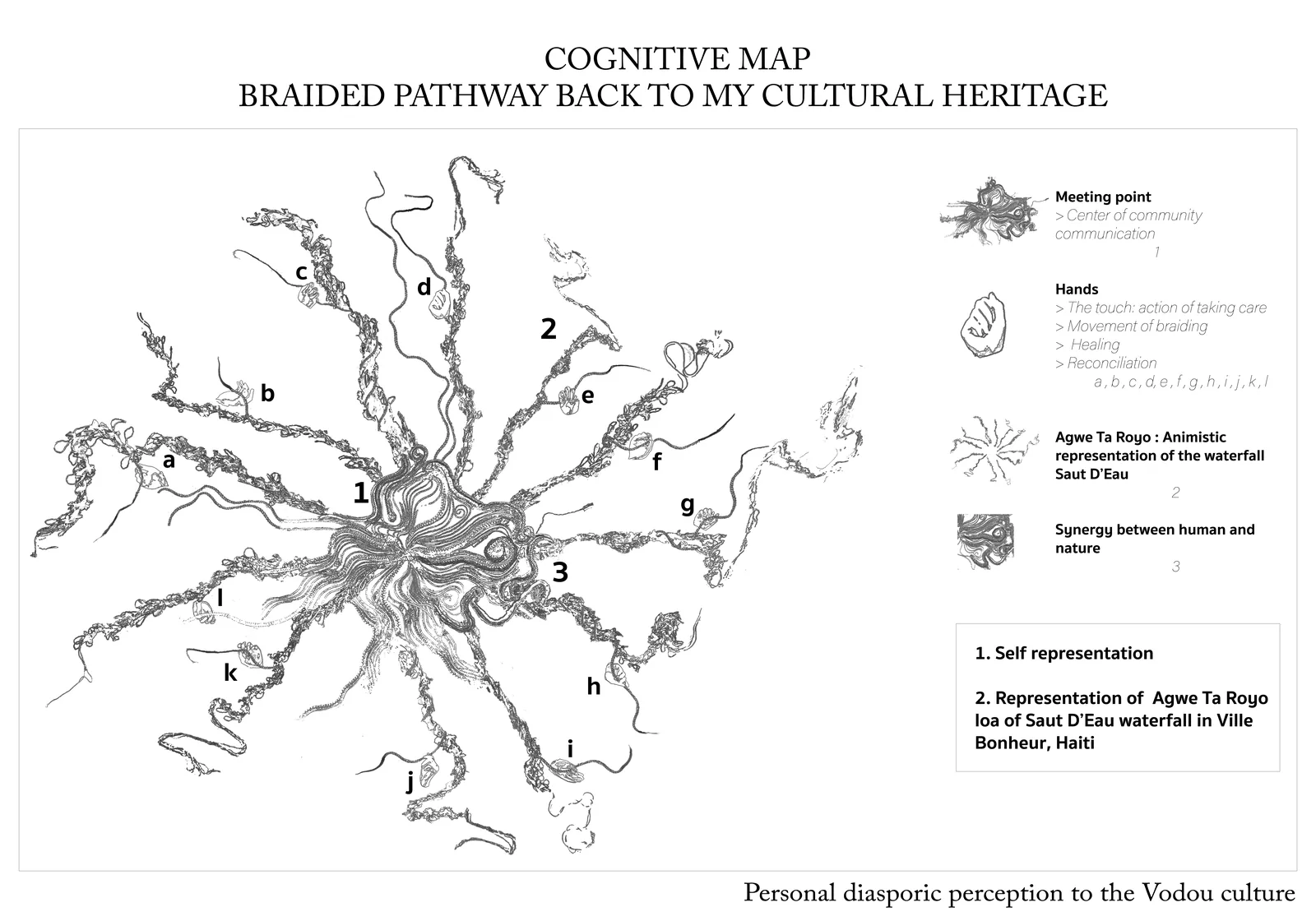
During her investigation, Agatha travelled through time zones interviewing internationally with different people from the diaspora (in Cuba, Dominican Republic, the U.S. to Valencia in Spain). She was able to speak to an oungan (Vodou priest), who informed her about the acknowledgment of the synergy that occurs between humans and their surroundings, placing those surroundings on the same level as humans. This means that things are acknowledged as equals, not merely as representations of divinity, but as divinity itself. In this case, the waterfall is not only where the Loa lives; it becomes the Loa itself. This process is called animism.
Agatha's materiality fabulation of the Tèt L'O ceremony, taking place in front of the body of water, ended in braiding 7-meter fabrics together with Haitian people she met in Eindhoven. Entering the water represents a reconnection with divinity and nature, a place to reconcile with emotions, a space that summons community, a meeting point. This space creates a synergy that binds humans and the waterfall together by joining hair and other materials to form a pattern. Braids not only represent the African roots of the culture, they also have a spiritual connection with divinity found in many other cultures.
Furthermore, the materials used to create this bond, between the humans, represented by the braided hair, and the spirit, is represented by the towel, silk, and cotton rope in different shades of blue and white. During a ceremony, a cotton cloth is laid close to the stream of water for offerings; the colors used to represent this Loa are white and blue. Their symbol is shaped like a boat and is typically represented on a silk flag since the 50's. The rope is an element found on their boat. Through her research, Agatha learned that this Loa asks for towels when coming ashore. Together, these elements create compose the landscape and help identify this Loa. These materials, combined, express individual human experiences that occur in front of the waterfall when in contact with the being as a community.
She is finding a healing strategy through community, using the symbol of the waterfall, to wash away the stigma of this ancestral knowledge in the West. She is, most importantly, claiming the narrative back, reimagining the essence of a culture through conversations and the collective making of this waterfall. She is also reclaiming this tropical space from the dominant colonial narratives we have absorbed. The time has come to cleanse ourselves in order to heal colonial wounds. It is important to disrupt colonial consciousness by revisiting the diasporic legacy to learn from it and train the gaze again.
With the collaborative effort of Agatha's community, she's braided these materials, symbolically intertwining herself with Haiti and others. This act of braiding serves as a ritual, linking them to their cultural roots, echoing the care given to the 4C body. Through this artistic expression, she seeks to challenge the legacies of colonial oppression and offer an intimate space of reflection and reconnection with heritage.